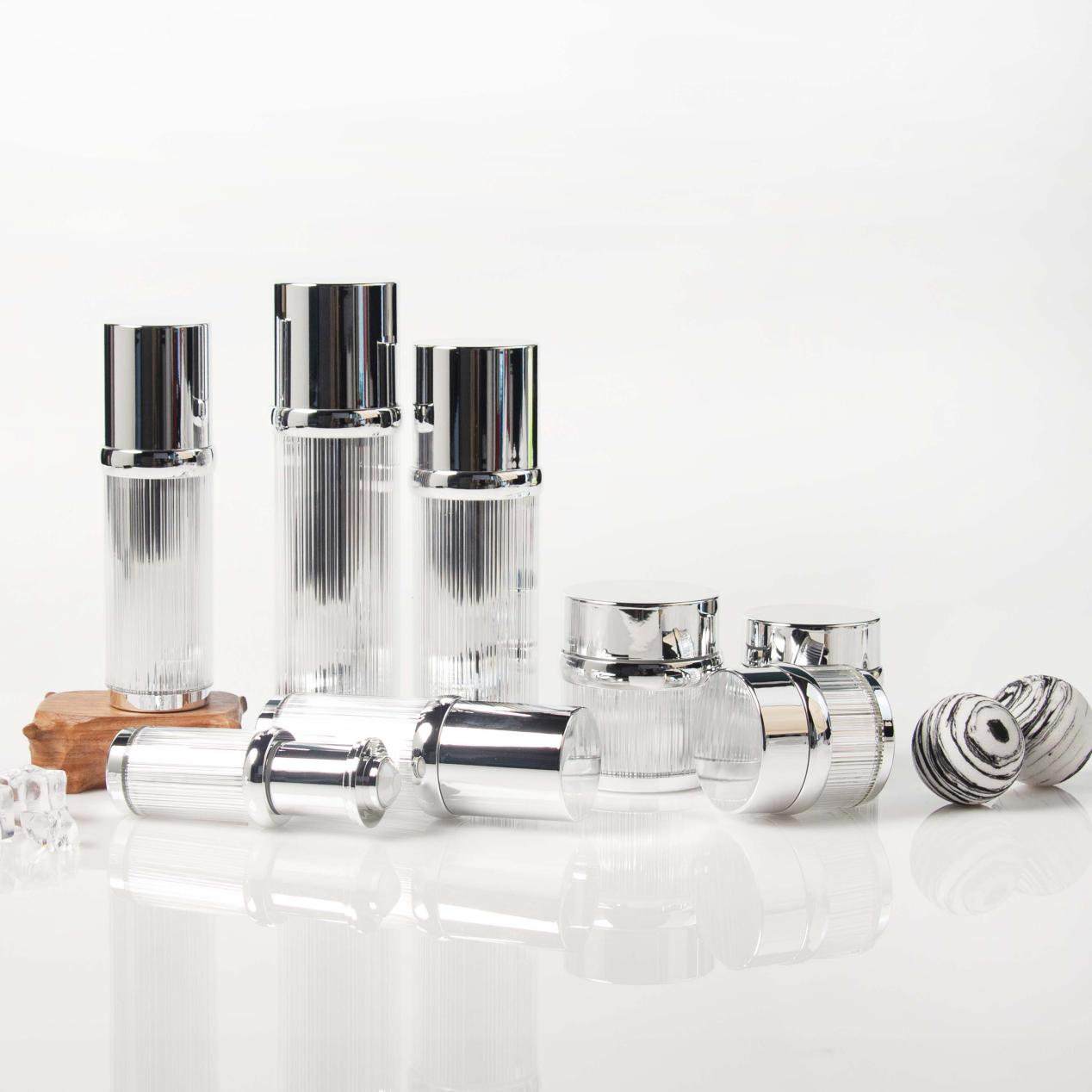
Acrylic Cream Jars Selection Criteria: The 2025 Updated Guide
Introduction
In the dynamic landscape of the global beauty and skincare industry, packaging has evolved from a mere “protective shell” to a critical brand asset that bridges product functionality, consumer experience, and market competitiveness. As we enter 2025, shifting consumer preferences—marked by a growing demand for transparency, safety, sustainability, and aesthetic differentiation—have propelled acrylic (PMMA) cream jars to the forefront of cosmetic packaging solutions.
Acrylic, or Polymethyl Methacrylate (PMMA), is celebrated for its unique blend of glass-like clarity, lightweight durability, and design versatility, making it an ideal choice for housing creams, lotions, serums, and other high-value skincare products. However, selecting the right acrylic cream jar is not a one-size-fits-all process. Brands (whether emerging startups or established giants) and even conscious consumers must navigate a complex set of factors—from material performance to environmental impact—to ensure the packaging aligns with product needs, brand identity, and market trends.
This guide is crafted to demystify the selection process for acrylic cream jars in 2025. It breaks down actionable, data-driven criteria, addresses common pain points, compares alternatives, and incorporates real-world case studies to help you make informed decisions. Whether you’re launching a new skincare line, revamping existing packaging, or simply seeking a reliable container for personal use, this guide will serve as your comprehensive roadmap.
1. What Are Acrylic (PMMA) Cream Jars?
Before diving into selection criteria, it’s essential to establish a clear understanding of the core product: acrylic cream jars.
Acrylic cream jars are cosmetic containers made from Polymethyl Methacrylate (PMMA), a synthetic polymer renowned for its optical clarity, impact resistance, and moldability. Often referred to as “plexiglass” or “acrylic glass,” PMMA mimics the premium visual appeal of glass but eliminates glass’s drawbacks—such as heaviness, fragility, and high shipping costs.
In 2025, acrylic cream jars are available in diverse shapes (oval, round, square, cylindrical), sizes (from 5ml samples to 100ml+ bulk containers), and designs (transparent, 磨砂 /matte, colored, or custom-printed). Their popularity stems from three key advantages:
- Aesthetic Appeal: High light transmission (up to 92%, comparable to glass) showcases product color, texture, and quality, enticing consumers at the point of purchase.
- Practicality: Lightweight (50-70% lighter than glass) and shatter-resistant, making them ideal for travel, bathroom use, and global shipping.
- Versatility: Compatible with various closures (screw-on lids, 按压泵 /pump dispensers, spoon-included designs) and customizable to reflect brand identity.
2. Core Selection Criteria for Acrylic Cream Jars in 2025
The selection of acrylic cream jars should be guided by product-specific needs (e.g., formulation type, shelf life) and brand goals (e.g., sustainability, luxury positioning). Below are the six non-negotiable criteria to evaluate, each with actionable assessment methods and 2025 industry benchmarks.
2.1 Material Performance: Durability, Clarity, and Compatibility
The performance of the PMMA material itself is the foundation of a high-quality acrylic cream jar. Poor material quality can lead to product contamination, packaging damage, or brand reputation risks. Focus on these four key metrics:
2.1.1 Transparency and Optical Quality
Acrylic’s primary selling point is its clarity, which allows consumers to see the product inside— a critical factor for skincare items where texture (e.g., creamy, gel-like) and color (e.g., natural, tinted) signal quality.
- Assessment Method: Look for jars with a light transmission rate of ≥90% (verified via supplier-provided test reports). Avoid jars with cloudiness, scratches, or air bubbles, as these diminish product visibility and perceived value.
- 2025 Trend: “Crystal-clear” acrylic is no longer the only option. Matte or frosted acrylic (with 60-70% light transmission) is gaining traction for natural and minimalist brands, as it reduces glare and conveys a “clean, eco-friendly” aesthetic.
2.1.2 Impact Resistance
Unlike glass, acrylic is shatter-resistant—but not all PMMA is created equal. Low-quality acrylic may crack or chip during shipping, handling, or bathroom use (e.g., accidental drops).
- Assessment Method: Request supplier data on Izod impact strength (a standard measure of toughness). For cream jars, a minimum Izod impact strength of 2.5 ft-lb/in (for thin-walled jars) or 3.0 ft-lb/in (for thick-walled luxury jars) is recommended. Additionally, conduct small-batch drop tests (e.g., dropping a filled jar from 3 feet onto a hard surface) to simulate real-world use.
- Case Example: In 2024, a small skincare brand reported a 15% product loss due to cracked acrylic jars during shipping. After switching to a supplier with Izod impact strength of 3.2 ft-lb/in, losses dropped to 2%.
2.1.3 Chemical Compatibility
Skincare formulations vary widely—from water-based serums to oil-rich creams and alcohol-containing toners. Acrylic must resist chemical degradation to avoid leaching harmful substances into the product or warping the jar.
- Assessment Method:
- Check if the PMMA complies with FDA 21 CFR Part 177.1010 (for food-contact materials, a benchmark for cosmetic safety) and EU Regulation (EC) No 1223/2009 (cosmetic packaging safety standards).
- Conduct compatibility tests: Fill a sample jar with your product and store it at 40°C (104°F) for 4 weeks. Inspect for jar discoloration, swelling, or product contamination (e.g., off-odors, texture changes).
- Key Note: Avoid using low-grade acrylic for formulations containing high concentrations of solvents (e.g., ethanol >20%) or strong acids/bases (pH <3 or >11), as these can degrade the material.
2.1.4 UV Resistance
Many skincare products (e.g., those with vitamin C, retinol, or antioxidants) are sensitive to UV light, which can break down active ingredients and reduce efficacy. Acrylic’s UV resistance helps protect these formulations.
- Assessment Method: Choose jars labeled as “UV-stabilized.” Look for suppliers who test UV resistance per ASTM D4329 (a standard for evaluating light stability). A good UV-stabilized acrylic jar will block ≥90% of UVB (280-315nm) and ≥80% of UVA (315-400nm).
- 2025 Innovation: Some manufacturers now offer “double-layer UV protection” acrylic jars, which include an inner coating to further shield light-sensitive products—ideal for premium anti-aging lines.
2.2 Size and Capacity: Align with Product Use and Consumer Behavior
Selecting the right size is critical for both functionality (e.g., preventing product waste) and marketing (e.g., catering to travel or bulk buyers). In 2025, consumer demand for “right-sized” packaging (to reduce waste and extend product freshness) has made this criterion more important than ever.
2.2.1 Common Acrylic Cream Jar Sizes and Their Applications
The table below outlines standard sizes, use cases, and target audiences— a starting point for narrowing down options:
| Capacity Range | Size Category | Recommended Product Types | Target Audience | Typical Use Cycle | Shelf Space Efficiency |
| 5-15ml | Small | Serum samples, eye creams, balms | Travelers, trial users, gift sets | 1-2 weeks | High (fits 6-8 jars per shelf unit) |
| 15-50ml | Medium | Daily moisturizers, face creams | Regular users (individuals) | 1-3 months | Medium (fits 4-5 jars per shelf unit) |
| 50-100ml | Large | Body creams, family-sized lotions | Families, value seekers, frequent users | 3-6 months | Low (fits 2-3 jars per shelf unit) |
| 100ml+ | Extra-Large | Bulk products (salons, spas) | Professional users, bulk buyers | 6+ months | Very low (requires dedicated shelf space) |
2.2.2 How to Choose the Right Size
Beyond the table above, consider these three factors:
- Product Formulation: Oil-rich creams (e.g., body butters) are used in larger quantities, so a 50-100ml jar may be appropriate. Conversely, concentrated serums (e.g., vitamin C serums) are used sparingly— a 15-30ml jar suffices to avoid expiration before use.
- Consumer Habits: In 2025, “on-the-go” lifestyles have boosted demand for small (10-15ml) travel-friendly jars. For example, a survey by the Global Cosmetic Packaging Association (GCPA) found that 62% of millennial and Gen Z consumers prioritize “travel-sized” options when purchasing skincare.
- Shelf Visuals: Retail shelves are competitive— jars that are too tall or wide may be difficult to stack or display alongside complementary products (e.g., a 100ml cream jar paired with a 30ml serum jar). Test jar dimensions against your intended shelf layout before finalizing.
2.3 Safety and Sealing: Protect Product Integrity and Consumer Health
Safety is non-negotiable in cosmetic packaging. Acrylic cream jars must prevent product contamination, leakage, and chemical leaching to meet regulatory standards and consumer trust.
2.3.1 Material Safety
Acrylic itself is non-toxic, but low-quality manufacturing processes may introduce contaminants (e.g., heavy metals, plasticizers).
- Key Certifications: Ensure jars meet:
- FDA Food Contact Approval: Confirms no harmful substances leach into products.
- REACH Compliance (EU): Restricts the use of 2300+ hazardous chemicals.
- CPSIA Certification (US): Ensures no lead or phthalates (common in low-grade plastics).
- Consumer Tip: For personal use, avoid unbranded acrylic jars from unknown suppliers— these may skip safety testing.
2.3.2 Sealing Performance
A poor seal leads to product drying, contamination (e.g., bacteria, dust), or leakage during shipping. In 2025, advanced sealing technologies have improved jar reliability— here’s what to look for:
| Sealing Type | How It Works | Advantages | Disadvantages | Best For |
| Screw-On Lid with Foam Liner | A foam pad inside the lid creates a tight seal when screwed closed. | Low cost, easy to use, compatible with most jar sizes. | Foam may degrade over time (especially with oil-based products). | Budget-friendly brands, non-sensitive formulations (e.g., body lotions). |
| Screw-On Lid with Silicone Liner | A silicone pad replaces foam, offering better chemical resistance. | Durable, heat-resistant, no degradation. | Slightly higher cost than foam. | Premium brands, oil-rich or acid-based products (e.g., retinol creams). |
| Vacuum Sealing | A one-way valve removes air from the jar, extending product shelf life. | Prevents oxidation (critical for antioxidants), reduces bacterial growth. | High cost, requires specialized manufacturing. | Luxury anti-aging lines (e.g., vitamin C serums, peptide creams). |
| Press-Top Seal | A lid that clicks shut, creating an airtight barrier. | User-friendly (no twisting), child-resistant options available. | May lose seal over time if lid is damaged. | Travel-sized jars, family-friendly products. |
- Assessment Method: Test the seal by:
- Filling the jar with water, closing it tightly, and inverting it for 24 hours— no leakage = pass.
- Storing a filled jar at 45°C (113°F) for 1 week— check for lid warping or seal failure.
2.4 Design and Customization: Differentiate Your Brand
In 2025, cosmetic packaging is a storytelling tool. Acrylic cream jars offer extensive customization options to align with your brand’s identity— whether it’s minimalist, luxury, or eco-focused.
2.4.1 Shape and Silhouette
The jar’s shape influences how consumers perceive your brand:
- Oval: Conveys elegance and sophistication— popular for premium anti-aging lines (e.g., Clinique’s Moisture Surge cream jars).
- Round: Classic and versatile— works for both drugstore and mid-range brands (e.g., The Ordinary’s “Buffet” serum jars).
- Square/Geometric: Modern and edgy— ideal for niche or sustainable brands looking to stand out.
- Cylindrical: Space-efficient for shelves— common in travel-sized sets.
2.4.2 Surface Treatment and Branding
Surface finishes enhance tactile and visual appeal while integrating brand elements:
- Transparent: Showcases product color (e.g., a pink tinted moisturizer) — best for products where “freshness” is a selling point.
- Matte/Frosted: Reduces glare, conveys a “clean, natural” vibe— popular for organic skincare brands (e.g., Tata Harper).
- Colored Acrylic: Adds brand recognition (e.g., L’Oréal’s signature blue jars for its Revitalift line). Ensure the colorant is FDA-approved and does not leach.
- Branding Techniques:
- Silk Screening: Ideal for logos or simple designs— durable and cost-effective for large batches.
- Hot Stamping: Adds metallic accents (gold, silver) for luxury brands— works well on matte acrylic.
- UV Printing: Enables full-color, high-resolution designs (e.g., ingredient lists, patterns)— perfect for limited-edition collections.
2.4.3 Accessory Compatibility
Accessories enhance user experience and functionality:
- Spoons: Prevent hand contact (reducing bacterial contamination) — essential for creams with active ingredients (e.g., vitamin E). Look for spoons made from BPA-free plastic or stainless steel.
- Pump Dispensers: Control product dosage (reducing waste) — ideal for liquid-to-creamy formulations (e.g., facial cleansers). Ensure the pump fits the jar’s neck size (standard sizes: 24mm, 28mm, 32mm).
- Dust Covers: Protect the lid from dust (especially for jars stored in bathrooms) — a small detail that elevates perceived quality.
2.5 Sustainability: Meet 2025’s Eco-Conscious Demand
Sustainability is no longer a “nice-to-have”— it’s a business imperative. In 2025, 78% of cosmetic consumers (per a GCPA 2024 survey) say they “willingly pay more for sustainable packaging.” Acrylic cream jars, while not as recyclable as PET, have made strides in eco-friendliness— here’s how to choose responsibly:
2.5.1 Recyclability
PMMA is technically recyclable, but its recycling rate is lower than PET (due to higher processing costs). Look for:
- Recycled Content: Jars made with post-consumer recycled (PCR) PMMA (e.g., 30% PCR acrylic) — reduces reliance on virgin plastic.
- Recycling Partnerships: Suppliers who offer take-back programs (e.g., collecting used jars to recycle into new packaging). For example, in 2024, L’Oréal launched a “Jar Recycling Program” for its acrylic cream jars, boosting brand loyalty by 12%.
- Clear Recycling Labels: Jars marked with resin identification code #7 (for “other plastics”) — helps consumers and recycling facilities identify PMMA.
2.5.2 Biodegradable Alternatives
While fully biodegradable acrylic is still in development, some manufacturers offer “bio-based PMMA” (made from renewable resources like corn starch) — these reduce carbon emissions by 20-30% compared to virgin acrylic. However, note that bio-based PMMA still requires recycling (it does not decompose in home compost).
2.5.3 Lightweighting
Reducing jar weight lowers shipping emissions and material use. In 2025, “lightweight acrylic jars” (10-15% lighter than traditional designs) are available without sacrificing durability. For example, a 50ml jar that weighs 20g (vs. 25g) reduces carbon emissions per shipment by ~8% (per logistics firm DHL’s 2024 report).
2.6 Cost and Cost-Effectiveness: Balance Quality and Budget
Cost is a key consideration, especially for small and medium-sized brands. Acrylic cream jars are more expensive than PET but cheaper than glass— here’s how to optimize cost without compromising quality:
2.6.1 Cost Breakdown
Acrylic jar costs vary based on size, customization, and order volume. Below is a 2025 cost benchmark (USD) for standard, non-customized jars:
| Jar Size | Cost per Unit (1,000+ order) | Cost per Unit (10,000+ order) | Cost per Unit (50,000+ order) |
| 15ml | \(0.50-\)0.70 | \(0.35-\)0.50 | \(0.25-\)0.35 |
| 30ml | \(0.70-\)0.90 | \(0.50-\)0.70 | \(0.35-\)0.50 |
| 50ml | \(0.90-\)1.20 | \(0.70-\)0.90 | \(0.50-\)0.70 |
| 100ml | \(1.20-\)1.50 | \(0.90-\)1.20 | \(0.70-\)0.90 |
- Customization Costs: Adding silk screening (+\(0.05-\)0.10 per unit), silicone liners (+\(0.10-\)0.15 per unit), or UV printing (+\(0.15-\)0.25 per unit) will increase costs— plan accordingly.
2.6.2 Long-Term Cost Savings
While acrylic has a higher upfront cost than PET, it offers long-term savings:
- Lower Shipping Costs: Acrylic is 30-50% lighter than glass— shipping 10,000 50ml acrylic jars costs ~$200 less than shipping the same number of glass jars (per USPS 2025 rates).
- Reduced Product Loss: Acrylic’s shatter resistance reduces waste from broken jars— a brand using glass may lose 5-8% of products to breakage, while acrylic users lose 1-2%.
- Longer Shelf Life: UV-stabilized acrylic protects products from light damage, extending shelf life by 2-3 months— reducing inventory waste.
2.6.3 Bulk Order Strategies
To lower costs:
- Order in Bulk: Suppliers offer 10-20% discounts for orders of 10,000+ units.
- Standardize Sizes: Using 1-2 jar sizes across your product line (e.g., 30ml for face creams, 50ml for body creams) simplifies manufacturing and reduces setup costs.
3. Common Challenges and Solutions in Acrylic Jar Selection
Even with careful planning, brands may face hurdles when selecting acrylic cream jars. Below are 2025’s most common pain points and actionable solutions:
3.1 Challenge: Scratching and Aesthetic Degradation
Acrylic is prone to scratching, which dulls its clarity over time (e.g., during shipping or daily use).
- Solution:
- Choose “scratch-resistant acrylic” (coated with a hardening layer like SiO₂) — these reduce scratch risk by 60-70%.
- Use protective packaging (e.g., bubble wrap, tissue paper) during shipping to prevent friction.
- Advise consumers to clean jars with soft, lint-free cloths (avoid abrasive sponges).
3.2 Challenge: Limited Customization for Small Batches
Emerging brands often need small batches (100-500 units) but find suppliers unwilling to offer customization (due to high setup costs).
- Solution:
- Partner with “small-batch friendly” suppliers (e.g., CosmoPacks, TYH Container) — many now offer minimum orders of 500 units with basic customization (e.g., silk screening).
- Use adhesive labels instead of direct printing for small batches— labels are cheaper and easier to update if branding changes.
3.3 Challenge: Environmental Criticism
Despite recyclability efforts, acrylic is still plastic— brands may face backlash from eco-conscious consumers.
- Solution:
- Highlight sustainability efforts (e.g., “made with 30% PCR acrylic” or “part of our jar recycling program”) on packaging and marketing materials.
- Offer “refillable” options— sell large refill pouches alongside acrylic jars, allowing consumers to reuse the jar and reduce waste.
- Partner with third-party sustainability certifiers (e.g., B Corp, Leaping Bunny) to validate your eco-credentials.
4. Acrylic vs. Alternative Packaging Materials: 2025 Comparison
Acrylic is not the only option for cream jars— understanding how it stacks up against glass, PET, and HDPE will help you make a holistic choice. Below is a detailed comparison:
| Feature | Acrylic (PMMA) Cream Jars | Glass Cream Jars | PET Cream Jars | HDPE Cream Jars |
| Transparency | High (90-92% light transmission) | Very High (92-95%) | Moderate (70-80%) | Low (opaque or semi-transparent) |
| Impact Resistance | High (shatter-resistant) | Very Low (fragile, breaks on drop) | High (flexible, rarely cracks) | Very High (durable, resistant to drops) |
| Weight (50ml jar) | ~20-25g | ~50-60g | ~15-20g | ~25-30g |
| Chemical Compatibility | Good (resists oils, mild acids) | Excellent (resists all formulations) | Fair (may degrade with strong solvents) | Good (resists oils, but not acids) |
| Recyclability | Limited (PCR options available) | High (100% recyclable, widely accepted) | Very High (most recycled plastic globally) | High (recyclable, but opaque limits reuse) |
| Cost (50ml jar, 10k order) | \(0.70-\)0.90 | \(1.50-\)2.00 | \(0.30-\)0.50 | \(0.40-\)0.60 |
| Brand Perception | Premium, modern | Luxury, high-end | Budget-friendly, practical | Eco-friendly, rugged |
| Best For | Mid-range to premium skincare, travel sets | Luxury anti-aging lines, high-end spas | Drugstore brands, mass-market products | Natural/organic brands, body care |
5. 2025 Industry Trends Shaping Acrylic Jar Selection
To stay ahead of the curve, align your acrylic jar selection with these emerging trends:
5.1 Smart Packaging Integration
In 2025, “smart acrylic jars” are gaining traction— these include NFC (Near Field Communication) chips embedded in the lid or jar body. Consumers can tap the jar with their phone to access:
- Product authenticity checks (to prevent counterfeiting).
- Usage tips (e.g., “apply 1 pump morning and night”).
- Expiration date reminders.
- Selection Tip: Choose jars with “NFC-ready” designs (flat lid surfaces for chip placement) if you plan to adopt smart features.
5.2 Minimalist and “Clean” Design
Consumers are increasingly drawn to “less is more” packaging— think uncluttered jar bodies, neutral colors (white, beige, clear), and minimal branding. Acrylic’s clarity complements this trend, as it lets the product “speak for itself.”
5.3 Gender-Neutral Aesthetics
Brands are moving away from “pink for women, blue for men” packaging. Acrylic jars in matte black, gray, or clear are ideal for gender-neutral lines— they appeal to a broader audience and reduce inventory costs (no need for separate male/female designs).
6. Case Studies: Successful Acrylic Jar Selection in 2024-2025
Real-world examples highlight how effective acrylic jar selection drives business results:
6.1 Case Study 1: Emerging Natural Skincare Brand “GreenGlow”
- Challenge: Launch a 3-product line (face cream, eye cream, body lotion) targeting eco-conscious millennials. Need packaging that conveys “natural” while remaining affordable.
- Selection:
- Size: 30ml (face/eye cream), 50ml (body lotion) — aligns with 1-3 month use cycles.
- Material: 30% PCR acrylic (frosted finish) — emphasizes sustainability.
- Sealing: Silicone-lined screw-on lids — prevents contamination.
- Branding: Simple silk-screened logo in earthy green.
- Result: 40% of consumers cited “packaging sustainability” as a key purchase driver. Sales exceeded projections by 25% in the first 6 months.
6.2 Case Study 2: Luxury Brand “LuxeSkin”
- Challenge: Revamp packaging for its best-selling anti-aging cream to compete with high-end rivals. Need to enhance perceived luxury and product protection.
- Selection:
- Size: 50ml oval jar — conveys elegance.
- Material: UV-stabilized, scratch-resistant acrylic (crystal-clear).
- Sealing: Vacuum-sealed lid with silicone liner — extends product shelf life.
- Accessories: Stainless steel spoon (included in the box) — reduces contamination.
- Branding: Gold hot-stamped logo on the lid.
- Result: Customer satisfaction scores increased by 30%, and the product was featured in “Best Luxury Skincare 2025” lists by Vogue and Allure.
7. Conclusion
Acrylic (PMMA) cream jars remain a top choice for cosmetic packaging in 2025, thanks to their unbeatable combination of clarity, durability, and versatility. However, selecting the right jar requires a strategic approach— one that balances material performance, size, safety, design, sustainability, and cost.
By following the criteria outlined in this guide:
- Brands can create packaging that aligns with their identity, protects their products, and resonates with 2025’s eco-conscious consumers.
- Consumers can choose jars that are safe, functional, and aligned with their values (e.g., sustainability, travel-friendliness).
As the beauty industry evolves, acrylic cream jars will continue to adapt— with innovations in recyclability, smart features, and minimalist design. By staying informed and prioritizing the needs of your product and audience, you can leverage acrylic’s strengths to stand out in a competitive market.
Ultimately, the best acrylic cream jar is not just a container—it’s a tool to build trust, enhance user experience, and drive long-term brand success.