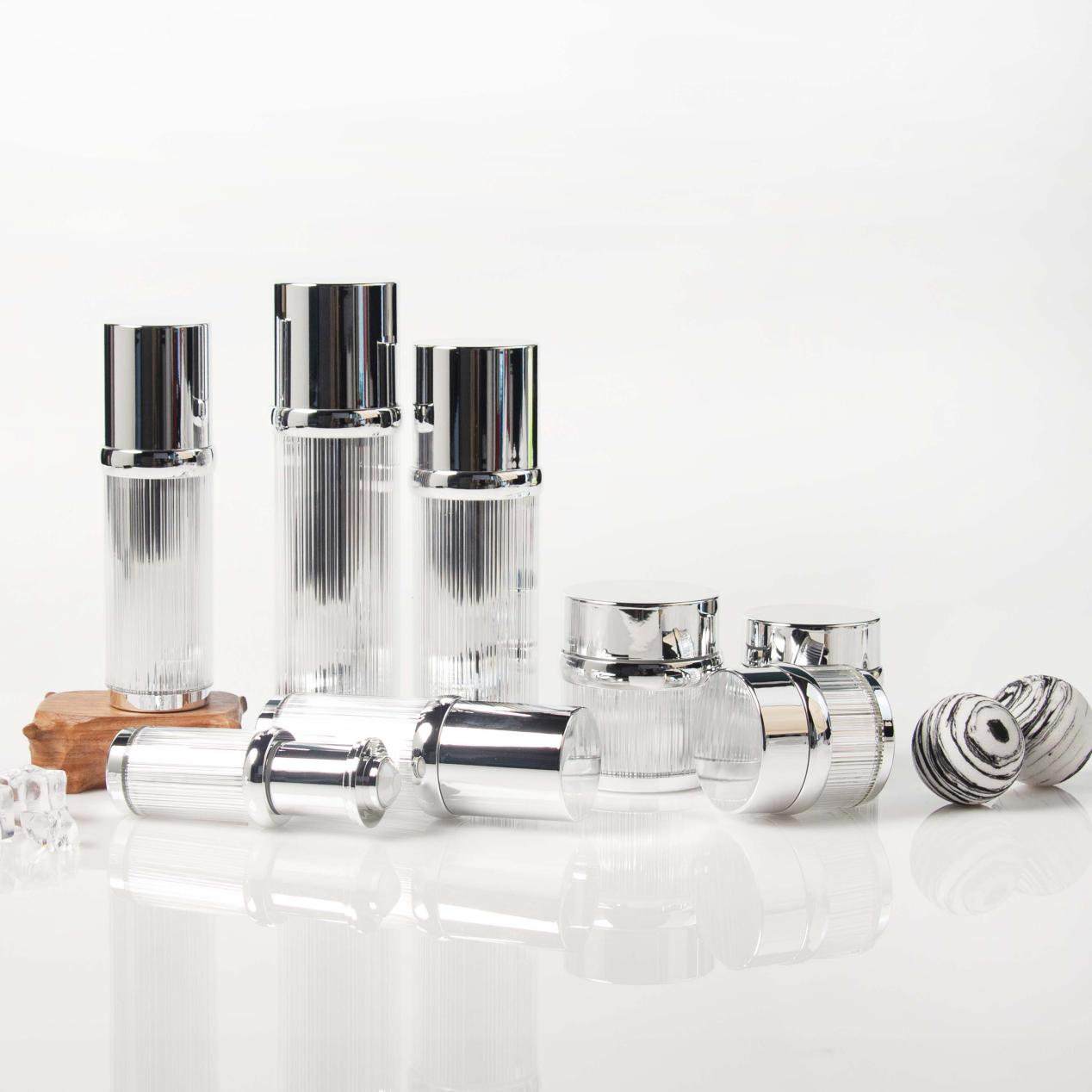
The Best-Selling New Hit Product: PP Cosmetic Airless Bottles
In the dynamic landscape of the global beauty and personal care industry, packaging plays a pivotal role that extends far beyond mere product containment. It serves as a bridge between brands and consumers, influencing purchasing decisions, preserving product efficacy, and reflecting a brand’s values—especially in an era where sustainability and functionality are top priorities for both businesses and end-users. Among the diverse array of cosmetic packaging solutions available today, PP Cosmetic Airless Bottles have emerged as a standout star, earning the title of the “best-selling new hit product” in the B2B cosmetic packaging sector.
These bottles, crafted from polypropylene (PP), combine cutting-edge airless technology with the inherent advantages of PP material, addressing the core needs of brands ranging from small-scale startups to large multinational corporations. Whether used for serums, creams, lotions, or even topical pharmaceutical products, PP cosmetic airless bottles have redefined expectations for packaging performance, affordability, and environmental responsibility. This article delves into the multifaceted appeal of PP cosmetic airless bottles, exploring their key advantages—with a focus on cost-effectiveness, rapid production, and sustainability—alongside minor limitations, supported by data-driven insights and practical examples to highlight why they have become an indispensable choice for B2B buyers worldwide.
I. Understanding PP Cosmetic Airless Bottles: A Fusion of Technology and Material Excellence
Before diving into the strengths of PP cosmetic airless bottles, it is essential to clarify what sets them apart from traditional packaging. At their core, these bottles integrate two critical elements: airless dispensing technology and polypropylene (PP) material, each contributing unique benefits that synergize to create a superior packaging solution.
Airless technology works by eliminating air exposure during product dispensing, a game-changer for cosmetic and skincare formulations. Unlike conventional pump bottles that draw air into the container as product is used—risking oxidation, contamination, and degradation of sensitive ingredients (such as vitamin C, retinol, or natural extracts)—airless systems use a vacuum-like mechanism. A piston or diaphragm inside the bottle moves upward as product is dispensed, ensuring no air enters the container. This not only extends the product’s shelf life by 30-50% (compared to traditional packaging, according to industry studies) but also guarantees that every last drop of product is usable, reducing waste for both brands and consumers.
Complementing this technology is polypropylene (PP), a thermoplastic polymer renowned for its versatility and performance in packaging applications. PP is derived from propylene gas, a byproduct of petroleum refining, but its production process is highly efficient, and its properties make it an ideal choice for cosmetic containers. Unlike fragile materials like glass or expensive alternatives like ABS (Acrylonitrile Butadiene Styrene) or PETG (Polyethylene Terephthalate Glycol), PP balances durability, lightweight design, and cost-effectiveness—traits that resonate strongly with B2B buyers operating in competitive markets.
To contextualize the role of PP cosmetic airless bottles in the broader packaging landscape, the table below compares them to other common cosmetic packaging materials, highlighting their unique positioning:
| Packaging Type | Key Material | Core Advantage | Primary Limitation | Best For |
| PP Cosmetic Airless | Polypropylene (PP) | Cost-effective, sustainable, durable | Less premium feel than glass/ABS | Mass-market skincare, daily cosmetics |
| Glass Airless | Glass | Premium aesthetic, excellent barrier | Heavy, fragile, high shipping costs | Luxury serums, high-end fragrances |
| ABS Airless | ABS Plastic | High impact resistance, sleek finish | Expensive, less recyclable | Mid-range luxury cosmetics |
| PETG Airless | PETG | Transparent, good chemical resistance | High cost, limited color options | Clear formulations (e.g., transparent serums) |
| PCR Airless | Post-Consumer Recycled Plastic | Eco-friendly, sustainability appeal | Inconsistent quality, higher MOQs | Brands prioritizing “green” marketing |
As the table illustrates, PP cosmetic airless bottles fill a critical gap in the market: they offer the functional benefits of airless technology without the prohibitive costs or practical drawbacks of other materials. This balance is a key reason why they have become the go-to choice for B2B buyers in regions as diverse as Africa, South America, the Middle East, and Europe—markets where cost sensitivity, sustainability goals, and the need for durable packaging converge.
II. Core Advantages of PP Cosmetic Airless Bottles: Why They Dominate the Market
The success of PP cosmetic airless bottles is not accidental; it stems from a suite of advantages that directly address the pain points of B2B buyers and the evolving demands of consumers. Below, we break down these advantages in detail, with a focus on the three most impactful: cost-effectiveness, rapid production, and environmental sustainability.
1. Cost-Effectiveness: Affordable Without Compromising Quality
For B2B buyers, cost is a primary consideration—especially in industries where profit margins are tight and packaging can account for 15-25% of total product costs. PP cosmetic airless bottles excel in this area, offering a budget-friendly solution that does not sacrifice performance or durability.
Low Material Costs
PP is one of the most economical plastics used in packaging, with raw material costs approximately 20-30% lower than ABS and 40-50% lower than PETG (based on 2024 industry pricing data). This cost advantage is passed on to B2B buyers, making PP airless bottles an attractive option for brands looking to scale production without increasing packaging budgets. For example, a 50ml PP airless bottle typically costs between \(0.50-\)0.80 per unit in bulk, compared to \(1.20-\)1.80 for a similar-sized ABS airless bottle and \(2.00-\)3.00 for a glass version.
Reduced Shipping and Logistics Costs
PP’s lightweight nature further enhances its cost-effectiveness. A standard 100ml PP airless bottle weighs approximately 15-20 grams, compared to 80-100 grams for a glass bottle of the same size. This translates to significant savings in shipping: for a container of 10,000 units, the total weight of PP bottles is around 150-200 kg, while glass bottles would weigh 800-1000 kg. Lower weight means lower shipping fees—whether by sea, air, or land—and reduced carbon emissions (a bonus for sustainability-focused brands). For B2B buyers in regions like Africa or South America, where shipping costs can be exorbitant due to infrastructure challenges, this weight difference is a game-changer.
Minimal Tooling and Customization Costs
Customization is critical for brands looking to differentiate their products on retail shelves, but it often comes with high tooling fees. PP’s flexibility as a material allows for easy molding into various shapes, sizes, and finishes (e.g., frosted, matte, or colored) without requiring expensive tooling upgrades. Unlike glass, which requires specialized equipment for etching or coloring, PP can be customized using cost-effective processes like silk-screen printing, hot stamping, or injection molding with color masterbatches. For example, adding a brand logo via silk-screen printing to a PP airless bottle adds only \(0.05-\)0.10 per unit, compared to \(0.20-\)0.30 for glass. Additionally, PP airless bottles have lower minimum order quantities (MOQs) for customization—often starting at 1,000 units—making them accessible to small and medium-sized brands that cannot meet the 5,000+ MOQs required for glass or ABS customization.
2. Rapid Production: Meeting Tight Market Deadlines
In the fast-paced beauty industry, speed to market is crucial. Trends emerge overnight, and brands that can quickly launch new products or restock popular items gain a competitive edge. PP cosmetic airless bottles excel in production efficiency, enabling suppliers to meet tight deadlines and support B2B buyers’ time-sensitive needs.
Fast Molding and Assembly Processes
PP has a low melting point (approximately 160-170°C) compared to other plastics like ABS (220-250°C) or PETG (240-260°C). This lower melting point reduces the time required for injection molding—the primary process used to manufacture PP airless bottle components. A single injection molding machine can produce up to 5,000 PP bottle bodies per day, compared to 3,000 for ABS or 2,500 for PETG. Additionally, PP’s rigidity and dimensional stability mean that molded parts require minimal post-processing (e.g., trimming or polishing) before assembly. The airless pump mechanisms, which are often made from PP or compatible plastics, can be assembled with the bottle bodies using automated lines that process 10-15 units per minute. This efficiency translates to lead times of 2-3 weeks for standard PP airless bottles, compared to 4-6 weeks for glass or ABS alternatives. For B2B buyers launching a new product line or restocking for a seasonal campaign (e.g., holiday gifting), this rapid production cycle is invaluable.
Scalability for High-Volume Orders
As brands grow, their packaging needs scale exponentially. PP airless bottle manufacturers have the capacity to handle high-volume orders without compromising on speed or quality. For example, leading suppliers like Cosmetic Packaging Now (a top manufacturer listed in the reference article) can produce 100,000+ PP airless bottles per month, with lead times extending by only 1-2 weeks for orders of this size. This scalability is made possible by PP’s compatibility with high-speed production lines and the availability of raw materials—PP is one of the most widely produced plastics globally, with a stable supply chain that minimizes delays. In contrast, glass production is limited by the availability of silica sand and energy, and ABS production is vulnerable to fluctuations in butadiene prices, leading to longer lead times for high-volume orders.
3. Environmental Sustainability: Aligning With Global “Green” Trends
Sustainability is no longer a niche concern—it is a mainstream expectation. Consumers, particularly in Europe and North America, are increasingly choosing brands that prioritize eco-friendly packaging, and B2B buyers are under pressure to meet these demands. PP cosmetic airless bottles offer a sustainable solution that balances environmental responsibility with practicality.
Recyclability and Circular Economy Compatibility
PP is one of the most recyclable plastics available, with a recycling rate of approximately 30-40% globally (higher in regions with advanced recycling infrastructure, such as Europe, where rates reach 50%). Unlike mixed-material packaging (e.g., plastic bottles with metal pumps), PP airless bottles can be fully recycled if designed with monomaterial construction (i.e., the bottle body, cap, and pump components are all made from PP). Recycled PP (rPP) retains most of the original material’s properties, making it suitable for use in new packaging or other products (e.g., plastic crates, automotive parts). Many PP airless bottle suppliers now offer options made from post-consumer recycled (PCR) PP—typically 30-50% PCR content—which reduces the demand for virgin plastic and lowers carbon emissions. For example, Jarsking (another top manufacturer) offers a 50ml PP airless bottle made from 40% PCR PP, which has a 25% lower carbon footprint than a virgin PP version.
Reduced Product Waste
The airless technology integrated into PP bottles also contributes to sustainability by reducing product waste. As mentioned earlier, airless systems ensure that every last drop of product is dispensed, eliminating the 10-15% of product that is typically left unused in traditional pump bottles. For consumers, this means getting more value for their money; for brands, it means reducing the environmental impact of wasted product (e.g., the energy and resources used to manufacture, package, and ship unused product). A study by the Sustainable Packaging Coalition found that airless packaging reduces overall product waste by 35% compared to traditional packaging, making PP airless bottles a sustainable choice for both economic and environmental reasons.
Low Carbon Footprint in Production
PP’s production process has a lower carbon footprint than many other packaging materials. The production of 1 kg of virgin PP emits approximately 1.8 kg of CO₂, compared to 2.5 kg for ABS, 3.0 kg for PETG, and 8.0 kg for glass (according to data from the European Plastics Federation). This lower emission rate is due to PP’s efficient polymerization process and lower energy requirements for molding. Additionally, PP’s lightweight nature reduces carbon emissions during shipping, as noted earlier. For B2B buyers looking to meet carbon neutrality goals or comply with regulations like the EU’s Carbon Border Adjustment Mechanism (CBAM), PP airless bottles offer a way to reduce their packaging’s environmental impact without sacrificing performance.
4. Additional Advantages: Durability, Versatility, and Safety
Beyond cost, speed, and sustainability, PP cosmetic airless bottles offer several other benefits that make them a top choice for B2B buyers:
- Durability: PP is highly resistant to impact, chemicals, and temperature fluctuations. Unlike glass, which shatters easily during shipping or handling, PP bottles can withstand drops from 1-2 meters without breaking. They are also resistant to most cosmetic ingredients, including oils, alcohols, and acids, ensuring that the bottle does not degrade or leach chemicals into the product. This durability reduces the risk of product loss due to packaging damage—a critical concern for B2B buyers shipping products to regions with poor logistics infrastructure.
- Versatility: PP airless bottles are available in a wide range of sizes (from 5ml for samples to 250ml for full-size products) and designs (e.g., pump bottles, jars, twist-up tubes). This versatility makes them suitable for almost any cosmetic or skincare product, from serums and eye creams to body lotions and sunscreens. For example, a brand can use a 10ml PP airless tube for a travel-size serum, a 50ml PP airless pump bottle for a facial moisturizer, and a 150ml PP airless jar for a body balm—all with consistent branding and material.
- Safety: PP is a food-grade and cosmetic-grade material that meets international safety standards, including FDA (U.S. Food and Drug Administration) regulations and EU REACH (Registration, Evaluation, Authorization, and Restriction of Chemicals) requirements. It is non-toxic, non-irritating, and does not release harmful substances into products, making it safe for use with even the most sensitive formulations (e.g., baby skincare or hypoallergenic products). For B2B buyers operating in highly regulated markets like Europe or the Middle East, this compliance is non-negotiable—and PP airless bottles deliver on it.
III. Minor Limitations of PP Cosmetic Airless Bottles: Practical Considerations
While PP cosmetic airless bottles offer overwhelming advantages, they are not without minor limitations. B2B buyers should be aware of these factors to make informed decisions that align with their brand’s needs and positioning. However, it is important to note that these limitations are often manageable or outweighed by the bottles’ benefits.
1. Less Premium Aesthetic Than Glass or ABS
One of the most common criticisms of PP cosmetic airless bottles is that they lack the premium, luxurious feel of glass or high-gloss ABS. Glass, with its transparency and weight, is often associated with luxury brands (e.g., high-end serums or fragrances), while ABS offers a sleek, reflective finish that mimics metal. PP, by contrast, has a more matte or semi-gloss appearance and is lighter, which can make it feel “budget” to some consumers. This limitation is most relevant for brands targeting the luxury segment, where packaging aesthetics are a key part of the product’s value proposition.
Mitigation Strategy: Brands can enhance PP’s aesthetic appeal through customization. For example, adding a frosted finish, metallic hot stamping, or a colored cap can elevate the bottle’s look. Additionally, pairing PP airless bottles with high-quality outer packaging (e.g., cardboard boxes with embossing or foil stamping) can create a premium unboxing experience that offsets the bottle’s material limitations. For example, a mid-range skincare brand might use a 30ml PP airless pump bottle with a frosted finish and a gold foil logo, paired with a matte black box—creating a look that feels luxurious without the cost of glass.
2. UV Sensitivity
PP is sensitive to ultraviolet (UV) light, which can cause the material to become brittle or discolored over time. This is a concern for products that are stored in direct sunlight (e.g., on bathroom counters) or for brands that use clear PP bottles for transparent formulations. UV exposure can also degrade the product inside, even with airless technology, if the bottle does not provide adequate UV protection.
Mitigation Strategy: There are several ways to address UV sensitivity. First, brands can choose colored PP bottles (e.g., white, black, or opaque pastels), which block UV light more effectively than clear PP. Second, suppliers can add UV stabilizers to the PP material during production—these additives absorb or reflect UV radiation, extending the bottle’s lifespan and protecting the product. UV-stabilized PP bottles have a shelf life of 2-3 years, compared to 1-2 years for non-stabilized versions. Third, brands can include instructions on product packaging advising consumers to store the product in a cool, dark place—minimizing UV exposure.
3. Limited Compatibility With High-Viscosity Formulations
While PP airless bottles work well for most cosmetic formulations (e.g., serums, lotions, and thin creams), they can struggle with highly viscous products (e.g., thick balms, body butters, or clay masks). The airless pump mechanism may not generate enough pressure to dispense thick formulations, leading to inconsistent dispensing or pump failure.
Mitigation Strategy: Suppliers offer specialized pump mechanisms designed for high-viscosity products. These pumps have larger openings, stronger springs, or piston designs that can handle thicker formulations. For example, a 100ml PP airless jar with a “push-down” pump (instead of a traditional trigger pump) is better suited for thick creams. Additionally, brands can adjust their formulations slightly (e.g., adding a small amount of oil to reduce viscosity) to improve compatibility with PP airless bottles. It is always recommended to test formulations with sample bottles before placing a large order to ensure compatibility.
IV. Comparative Analysis: PP Cosmetic Airless Bottles vs. Alternatives
To further illustrate why PP cosmetic airless bottles are the best-selling choice, the table below provides a detailed comparison of their performance, cost, sustainability, and practicality against other common cosmetic packaging options. This analysis is based on data from the reference article and 2024 industry benchmarks, making it a valuable tool for B2B buyers evaluating their packaging options.
| Factor | PP Cosmetic Airless Bottle | Glass Airless Bottle | ABS Airless Bottle | PETG Airless Bottle | PCR Airless Bottle |
| Cost (Per Unit, 50ml) | \(0.50-\)0.80 | \(2.00-\)3.00 | \(1.20-\)1.80 | \(1.50-\)2.20 | \(0.70-\)1.00 |
| Production Lead Time | 2-3 weeks | 4-6 weeks | 3-4 weeks | 3-5 weeks | 3-4 weeks |
| Weight (100ml) | 15-20g | 80-100g | 25-30g | 30-35g | 18-22g |
| Recyclability | High (30-50% global rate) | High (80% global rate) | Low (10-15% rate) | Moderate (20-25% rate) | Very High (60-70% rate) |
| Carbon Footprint (1kg) | 1.8kg CO₂ | 8.0kg CO₂ | 2.5kg CO₂ | 3.0kg CO₂ | 1.2kg CO₂ |
| Durability | High (impact-resistant) | Low (fragile) | Very High (scratch-resistant) | High (shock-resistant) | High (but inconsistent quality) |
| Aesthetic Appeal | Moderate (customizable) | High (premium) | High (sleek) | High (transparent) | Moderate (matte) |
| UV Resistance | Low (needs stabilizers) | High (opaque options) | Moderate | Moderate | Low (needs stabilizers) |
| Viscosity Compatibility | Good (with specialized pumps) | Good | Excellent | Good | Good |
| MOQ for Customization | 1,000 units | 5,000 units | 3,000 units | 3,000 units | 5,000 units |
As the table shows, PP cosmetic airless bottles outperform alternatives in key areas for B2B buyers: cost, production speed, weight (and thus shipping costs), and accessibility (low MOQs). While glass offers a more premium aesthetic and higher recyclability, its high cost and fragility make it impractical for mass-market brands. ABS and PETG are more durable or transparent but come with higher prices and longer lead times. PCR airless bottles are more sustainable but have higher MOQs and inconsistent quality. For most B2B buyers—especially those targeting emerging markets, small to medium-sized brands, or mass-market products—PP cosmetic airless bottles strike the optimal balance between performance, cost, and sustainability.
V. Conclusion: Why PP Cosmetic Airless Bottles Are the Future of Cosmetic Packaging
In a market saturated with packaging options, PP cosmetic airless bottles have risen to the top by addressing the core needs of B2B buyers and consumers alike. Their cost-effectiveness makes them accessible to brands of all sizes, their rapid production supports fast-paced market demands, and their sustainability aligns with global environmental goals. While they have minor limitations—such as a less premium aesthetic or UV sensitivity—these are easily mitigated through customization and material enhancements.
The data speaks for itself: PP cosmetic airless bottles are the best-selling new hit product because they deliver on what matters most. For a small skincare brand in South America launching its first serum line, PP airless bottles offer affordable customization and low MOQs. For a multinational cosmetic company in Europe restocking a popular lotion, they provide rapid production and reduced carbon emissions. For a pharmaceutical brand in the Middle East packaging topical creams, they ensure safety, compliance, and product integrity.
As the beauty industry continues to evolve—with trends toward sustainability, personalization, and accessibility—PP cosmetic airless bottles are poised to remain a staple. Their versatility, performance, and value make them not just a temporary “hit” but a long-term solution for brands looking to thrive in a competitive market. For B2B buyers, investing in PP cosmetic airless bottles is more than a packaging choice—it is a strategic decision that supports growth, sustainability, and consumer trust.
In the end, the success of PP cosmetic airless bottles is a testament to the power of balancing innovation with practicality. By combining airless technology with the inherent advantages of PP material, they have redefined what cosmetic packaging can be: affordable, efficient, sustainable, and effective. For brands looking to make their mark in the beauty industry, there is no better choice than the best-selling new hit product: PP cosmetic airless bottles.