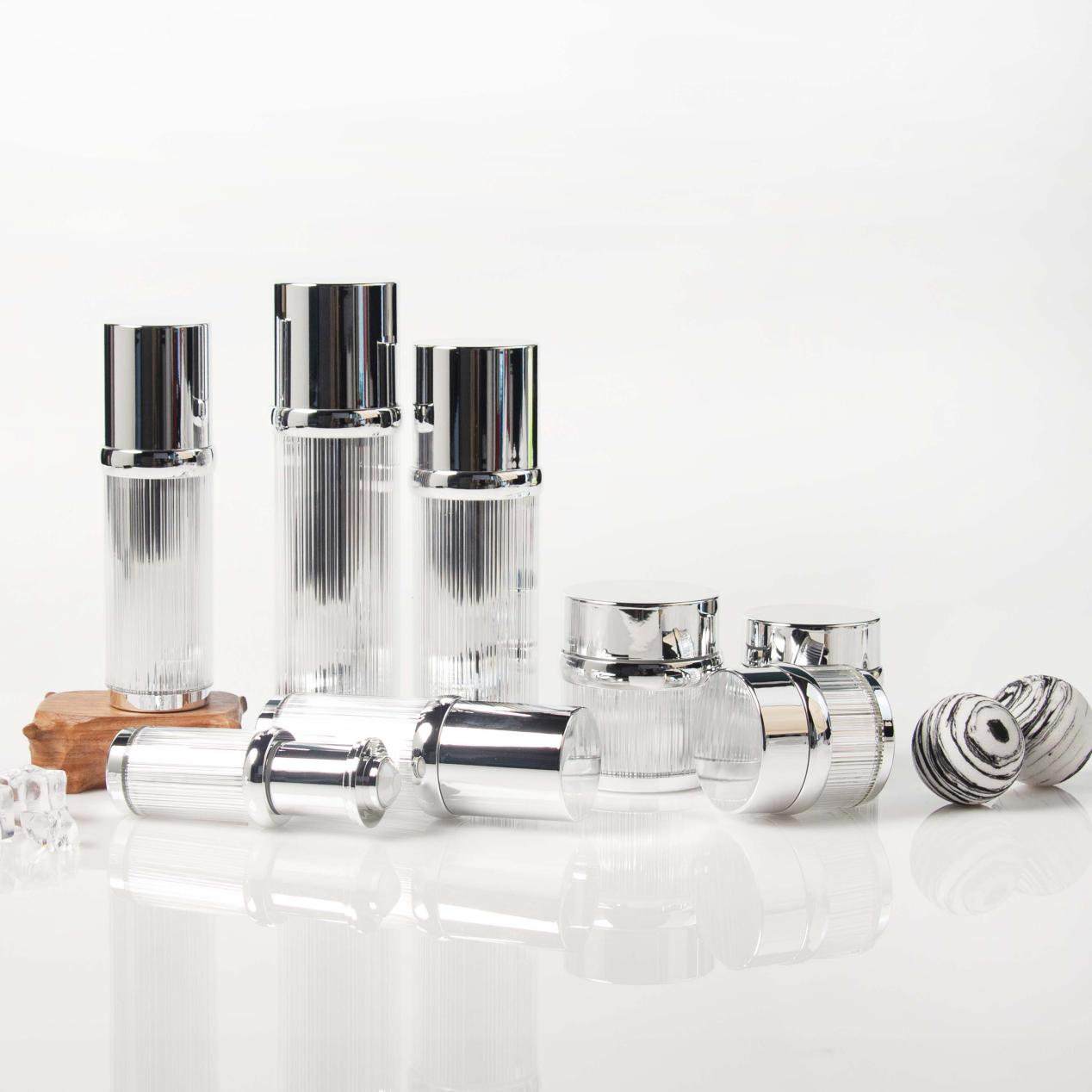
The Impact of Eco-Friendly Cosmetic Jars with Replaceable Inner Cases on the International Trade of Cosmetic Packaging Materials
1. Introduction
In recent decades, the global beauty and skincare industry has witnessed a paradigm shift driven by growing environmental consciousness. Consumers, regulators, and brands alike are increasingly prioritizing sustainability, turning “eco-friendliness” from a niche marketing tactic into a non-negotiable standard for market entry. Within this landscape, eco-friendly cosmetic jars with replaceable inner cases have emerged as a transformative innovation in packaging design—one that not only addresses the industry’s plastic waste crisis but also reshapes the dynamics of international trade in cosmetic packaging materials.
The core value of these jars lies in their circular design: the durable outer shell (often made from glass, recycled plastic, or bamboo) is reused multiple times, while the disposable inner case (holding the cosmetic product) is replaced when empty. This model reduces packaging waste by 50–70% compared to single-use containers, aligning with global sustainability goals such as the United Nations’ Sustainable Development Goal 12 (Responsible Consumption and Production) and the European Union’s (EU) New Circular Economy Action Plan. For international B2B buyers—particularly those in regions like Europe, Africa, South America, and the Middle East—this innovation has become a strategic tool to meet local regulatory demands, cater to eco-conscious consumers, and gain a competitive edge in crowded markets.
However, the adoption of eco-friendly cosmetic jars with replaceable inner cases also introduces new complexities to international trade. From material sourcing and supply chain management to cost calculations and compliance with regional sustainability standards, every 环节 of the trade process is influenced by the unique characteristics of these packaging solutions. This article explores the multifaceted impact of these jars on global cosmetic packaging trade, analyzing their types, material implications, supply chain challenges, cost dynamics, regional market trends, and future outlook—with a focus on how B2B buyers and suppliers can navigate this evolving landscape.
2. Types of Eco-Friendly Cosmetic Jars with Replaceable Inner Cases and Their Trade Implications
Not all eco-friendly cosmetic jars with replaceable inner cases are created equal. Their design, material composition, and functionality vary significantly, directly influencing their suitability for different regional markets, transportation logistics, and trade volumes. Understanding these variations is critical for international buyers, as each type presents distinct opportunities and challenges in cross-border transactions.
2.1 Key Types and Their Trade-Relevant Characteristics
The following table categorizes the most common types of eco-friendly cosmetic jars with replaceable inner cases, highlighting their features, target applications, and specific implications for international trade:
Table 1: Types of Eco-Friendly Cosmetic Jars with Replaceable Inner Cases and Their Impact on International Trade
| Type Name | Key Distinguishing Features | Primary B2B Applications | Trade-Related Considerations | Major Export Regions |
| Refillable Glass Jar | Durable inert glass; easy inner case replacement; premium aesthetic; impermeable to air/light | High-end skincare (e.g., anti-aging serums, luxury creams) | – Weight: Heavier than plastic → higher ocean freight costs.- Fragility: Requires protective packaging (e.g., foam inserts) → increased logistics expenses.- Compliance: Aligns with EU/US strict sustainability standards. | Germany, Italy, China, Japan |
| Plastic Airless Jar with Replaceable Core | Lightweight PCR plastic; airtight design (extends product shelf life); cost-effective | Mass-market skincare (e.g., moisturizers, sunscreens) | – Logistics: Low shipping weight → ideal for long-distance trade (e.g., Africa, South America).- Perception: Plastic may face resistance in EU but is widely accepted in price-sensitive markets.- MOQ: High (10,000+ units) → favors large-scale importers. | China, Vietnam, Brazil |
| Multi-Material Refillable Jar | Combines glass/plastic/aluminum for functionality + aesthetics; customizable designs | Luxury cosmetics (e.g., perfumes, high-end foundations) | – Complexity: Mixed materials may complicate recycling compliance in regions with underdeveloped waste management (e.g., parts of Africa).- Lead Time: Customization (e.g., silk-screening, 3D printing) → longer production cycles.- Premium Pricing: Appeals to Middle Eastern/European luxury brands. | France, South Korea, China |
| Bamboo Outer Jar with Inner Refill | Biodegradable bamboo outer shell; plastic/PLA inner case; natural aesthetic | Organic/natural product lines (e.g., herbal creams, vegan skincare) | – Sourcing: Bamboo is primarily grown in Southeast Asia → higher import costs for non-Asian buyers.- Durability: Bamboo is prone to moisture damage → requires climate-controlled shipping.- Certification: FSC (Forest Stewardship Council) certification is mandatory for EU exports. | Thailand, Indonesia, China |
| PCR Plastic Jar | Made from post-consumer recycled plastic; low carbon footprint; lightweight | Sustainable-focused brands (global) | – Regulatory Variability: EU mandates ≥30% PCR content; Africa has no strict requirements.- Aesthetics: Limited color/finish options → less suitable for luxury markets.- Cost: Lower than glass but higher than virgin plastic → balances affordability and sustainability. | China, Germany, United States |
2.2 Case Study: Regional Preference Driving Trade Flows
The trade implications of these jar types are vividly illustrated by regional market dynamics. For example:
- Europe (Germany): As a leader in sustainability regulation (e.g., the EU’s Single-Use Plastics Directive), German buyers prioritize refillable glass jars and PCR plastic jars. This drives significant imports from glass manufacturers in Italy and PCR plastic suppliers in China, with logistics focused on reducing breakage (e.g., using shock-absorbent packaging) and ensuring compliance with REACH (Registration, Evaluation, Authorization, and Restriction of Chemicals) standards.
- Africa (South Africa): Price sensitivity and underdeveloped logistics infrastructure make plastic airless jars the most traded type. Importers in South Africa primarily source from China and Vietnam, leveraging ocean freight to minimize costs and negotiating high MOQs (15,000+ units) to secure lower per-unit prices.
- Middle East (UAE): Luxury cosmetic brands in the UAE favor multi-material refillable jars and bamboo outer jars, which align with the region’s demand for premium, aesthetically pleasing packaging. Trade flows here are dominated by imports from France (for multi-material designs) and Thailand (for bamboo jars), with a focus on fast delivery via air freight to meet seasonal demand (e.g., Ramadan).
3. Material Selection for Eco-Friendly Jars: A Catalyst for International Trade Dynamics
The choice of material for eco-friendly cosmetic jars with replaceable inner cases is not merely a design decision—it is a strategic factor that shapes trade routes, cost structures, and regulatory compliance. Four key materials dominate the market: recycled PET (rPET), glass, aluminum, and bioplastics (e.g., PLA). Each material’s availability, cost, and regional regulatory requirements directly influence how and where these jars are traded internationally.
3.1 Material Properties and Their Trade Impact
The table below compares these materials, focusing on their trade-relevant attributes such as supply dominance, compliance requirements, and logistical challenges:
Table 2: Key Materials for Eco-Friendly Cosmetic Jars and Their Influence on International Trade
| Material | Key Properties | Trade Advantages | Trade Challenges | Regional Supply Dominance | Compliance Requirements for International Trade |
| Recycled PET (rPET) | Good clarity; moisture-resistant; lightweight; 100% recyclable | – Low shipping weight → reduces ocean freight costs.- Compatible with most cosmetic formulations → high global demand.- Scalable production → meets large MOQs. | – Higher cost than virgin PET (15–20% premium).- PCR content verification requires third-party audits (e.g., SGS).- Quality varies by supplier (e.g., Chinese rPET vs. European rPET). | Europe (Germany, Netherlands), China | – EU: EN 15343 (recycled plastic standards); REACH.- US: FDA approval for cosmetic contact.- Global: ISO 14001 (environmental management). |
| Glass | Inert (no chemical leaching); high-temperature tolerance; premium aesthetic | – Impermeable → preserves product integrity (reducing return rates in trade).- Universally recyclable → no regional recycling infrastructure barriers.- Appeals to luxury markets → high profit margins for importers. | – Heavy (2–3x denser than plastic) → higher freight costs (e.g., \(2,000 vs. \)800 per 10,000 units to Africa).- Fragile → increased insurance costs (5–10% of total shipment value). | Europe (Germany, France), Japan, China | – EU: CE marking (safety/health/environment).- US: CPSIA (consumer product safety).- China: GB 4806.5 (food contact glass). |
| Aluminum | Lightweight; corrosion-resistant; barrier to light/oxygen; 100% recyclable | – Low shipping weight → ideal for long-distance trade (e.g., Middle East to Africa).- Durable → minimal damage during transit.- Suitable for temperature-sensitive products (e.g., natural creams). | – Higher manufacturing complexity → limited suppliers (concentrated in Middle East/Canada).- Specialized printing (e.g., embossing) requires additional production time.- Premium material cost (30% higher than rPET). | Middle East (UAE, Saudi Arabia), Canada, China | – EU: REACH (chemical safety).- US: FDA (cosmetic packaging).- Global: ISO 22000 (food safety, applicable for cosmetic contact). |
| Bioplastics (PLA) | Biodegradable; made from renewable resources (corn starch); low carbon footprint | – Appeals to eco-conscious markets (EU, North America).- Reduces plastic waste penalties in strict regions (e.g., EU’s plastic tax).- Unique selling point for “zero-waste” brands. | – Low heat resistance (<60°C) → cannot be used for hot-filled products (e.g., some serums).- Requires industrial composting → useless in regions with no composting facilities (e.g., rural Africa).- High production cost (25% higher than rPET). | Europe (Germany, Belgium), US, China | – EU: EN 13432 (biodegradability/compostability).- US: ASTM D6400 (compostability).- Japan: JIS K 6953 (biodegradable plastics). |
3.2 Material Sourcing and Trade Routes
The regional concentration of material supply has created distinct trade routes for eco-friendly cosmetic jars:
- rPET Jars: Europe is both a major producer (via recycled plastic facilities in Germany) and importer (of cost-effective rPET jars from China). For example, German cosmetic brands often import rPET jars from Chinese suppliers (e.g., Jarsking, HC Packaging) because Chinese rPET production costs are 15% lower than European counterparts, offsetting the \(1,200–\)1,500 ocean freight cost per container.
- Glass Jars: Italy (known for high-quality cosmetic glass) exports to luxury brands in the Middle East and North America, using air freight to ensure timely delivery. Meanwhile, Chinese glass manufacturers (e.g., in Shandong province) supply mass-market glass jars to Africa, leveraging lower labor costs and bulk ocean shipping to compete on price.
- Aluminum Jars: The Middle East (UAE, Saudi Arabia) is a dominant exporter of aluminum jars to Africa, thanks to proximity (reducing shipping time to 2–3 weeks vs. 6–8 weeks from China) and abundant aluminum production (driven by local mining).
- PLA Jars: Europe (Germany, Belgium) leads in PLA jar production, with exports primarily to EU countries and North America. Due to PLA’s high cost and composting requirements, trade to developing regions (e.g., Africa) remains minimal—accounting for less than 5% of global PLA jar trade.
4. Supply Chain Challenges in International Trade of Eco-Friendly Jars
While eco-friendly cosmetic jars with replaceable inner cases offer sustainability benefits, they also introduce unique supply chain challenges that disrupt international trade flows. These challenges are particularly acute in regions with underdeveloped infrastructure (e.g., Africa, South America) and are compounded by the need for strict quality control and regulatory compliance.
4.1 Key Supply Chain Pain Points and Trade Disruptions
- Unreliable Supplier Networks in Emerging Markets
In regions like Africa and South America, local suppliers of eco-friendly jars are scarce, forcing buyers to rely on international imports. However, long-distance trade exposes buyers to risks such as delayed shipments (due to port congestion in Lagos or Santos) and inconsistent quality (e.g., PCR plastic jars with lower-than-advertised recycled content). For example, a 2024 survey of South African cosmetic importers found that 42% had experienced delays of 4+ weeks in receiving eco-friendly jars from China, leading to stockouts and lost sales.
- Logistical Complexities of Fragile/Diverse Materials
The varied materials of eco-friendly jars require specialized logistics. Glass jars need shock-absorbent packaging and temperature-controlled containers (to prevent condensation damage), increasing shipping costs by 20–30%. Bamboo jars, meanwhile, are susceptible to moisture and pest infestation, requiring fumigation before export—adding 5–7 days to production timelines and \(300–\)500 per shipment in fees. These logistical hurdles often deter small-scale importers in developing regions, limiting market access for eco-friendly jars.
- Regulatory Compliance and Certification Barriers
Different regions have conflicting sustainability standards, creating compliance headaches for international traders. For instance:
- The EU requires eco-friendly jars to carry the “EU Ecolabel,” which mandates 50% recycled content and carbon footprint reporting—costing suppliers \(10,000–\)15,000 in certification fees.
- Brazil’s ANVISA (National Health Surveillance Agency) requires extensive testing of cosmetic packaging for chemical leaching, a process that takes 8–12 weeks and costs \(2,000–\)3,000 per jar type.
- African countries (e.g., Nigeria) have no 统一 sustainability standards but often impose arbitrary import tariffs (15–25%) on “eco-friendly” products, citing “luxury tax”—a practice that discourages imports.
4.2 Solutions to Mitigate Supply Chain Risks
To address these challenges, B2B buyers and suppliers are adopting innovative strategies:
- Multi-Supplier Tiered Networks: Buyers are partnering with primary (e.g., Chinese) and secondary (e.g., regional) suppliers to ensure continuity. For example, a Kenyan cosmetic brand might source 70% of its plastic airless jars from China (for cost) and 30% from South Africa (for quick replenishment during delays).
- Localized Production Hubs: Major suppliers are establishing factories in key regions to reduce logistics costs. In 2023, HC Packaging (China) opened a facility in Brazil to produce PCR plastic jars for the South American market, cutting shipping time from 6 weeks to 5 days and eliminating 20% import tariffs.
- Digital Compliance Platforms: Companies like EcoVadis and Sustainalytics offer cloud-based tools to streamline certification and reporting. These platforms allow suppliers to store compliance documents (e.g., ISO 14001, EU Ecolabel) and share them with buyers in real time, reducing administrative delays by 40%.
5. Cost and Pricing Dynamics: Shaping International Procurement Decisions
Cost is a defining factor in international trade, and eco-friendly cosmetic jars with replaceable inner cases present a unique cost-benefit equation for B2B buyers. While their upfront cost is higher than single-use plastic jars (15–40% more), their long-term savings (via reduced waste, repeat purchases, and brand loyalty) make them economically viable. However, the cost structure varies significantly by region, material, and order volume—directly influencing procurement decisions and trade flows.
5.1 Cost Composition Across Major Export Regions
The table below breaks down the cost of producing 10,000 units of eco-friendly cosmetic jars in four key export regions, highlighting how labor, materials, and logistics shape pricing:
Table 3: Cost Composition Comparison for 10,000 Units of Eco-Friendly Cosmetic Jars (PCR Plastic Type)
| Cost Component | China (Export to Europe) | Germany (Domestic/EU Export) | Brazil (Export to South America) | South Africa (Import from Middle East) |
| Materials (%) | 40 (PCR plastic, rPET) | 55 (high-grade PCR, additives) | 45 (PCR plastic, local resins) | 50 (aluminum, low-grade PCR) |
| Labor (%) | 15 (low-skilled labor) | 30 (skilled labor, customization) | 20 (medium-skilled labor) | 25 (imported skilled labor) |
| Manufacturing Overhead (%) | 10 (basic eco-practices) | 20 (advanced sustainability infrastructure) | 15 (moderate eco-practices) | 18 (high utility costs) |
| Logistics (%) | 20 (ocean freight, EU tariffs) | 5 (road transport, no tariffs) | 12 (regional freight, MERCOSUR tariffs) | 22 (sea freight, South African customs) |
| Quality Control (%) | 8 (ISO 9001 compliance) | 15 (ISO 9001 + EU safety tests) | 10 (ISO 9001 + ANVISA testing) | 10 (ISO 9001 + SABS certification) |
| Margin (%) | 7 (competitive pricing) | 10 (premium for quality) | 8 (balanced regional pricing) | 10 (limited local supply) |
| Total Cost (USD) | $12,000 | $25,000 | $18,000 | $21,000 |
5.2 Pricing Influencers in International Trade
Several factors determine the final price of eco-friendly jars in cross-border transactions:
- Minimum Order Quantity (MOQ): Suppliers typically set MOQs of 5,000–10,000 units for eco-friendly jars. Higher MOQs lead to lower per-unit prices: a Chinese supplier might charge \(1.20 per PCR jar for 10,000 units but \)1.50 for 5,000 units. This favors large importers (e.g., European cosmetic chains) and disadvantages small businesses in developing regions, who often struggle to meet MOQs.
- Incoterms: The choice of Incoterms (e.g., FOB, CIF, DDP) shifts cost responsibility between buyers and sellers. For example:
- FOB (Free On Board) Shanghai: The supplier covers production and delivery to the Shanghai port; the buyer pays for ocean freight, insurance, and customs. This is common for Chinese exports to Africa, with buyers saving 10–15% by negotiating freight directly.
- DDP (Delivered Duty Paid) Berlin: The supplier covers all costs (production, freight, tariffs, delivery to Berlin). This is preferred by European buyers, who avoid logistical hassle but pay a 5–10% premium.
- Customization: Custom designs (e.g., brand logos, unique shapes) increase costs by 20–30%. For example, a multi-material jar with silk-screened branding costs \(2.50 per unit, compared to \)2.00 for a standard design. Luxury brands (e.g., in the Middle East) are willing to pay this premium, while mass-market brands (e.g., in Africa) opt for standard designs to reduce costs.
5.3 Cost Optimization Strategies for Buyers
International buyers are using the following tactics to balance sustainability and cost:
- Bulk Purchasing with Long-Term Contracts: Signing 1–2 year contracts with suppliers locks in lower prices. For example, a French cosmetic brand that committed to buying 50,000 PCR jars annually from a German supplier secured a 12% discount on per-unit pricing.
- Material Substitution: Replacing high-cost materials with affordable alternatives. For instance, South American buyers are switching from glass to aluminum jars, reducing costs by 30% while maintaining a premium look.
- Regional Sourcing: Buying from nearby suppliers reduces logistics costs. A UAE-based brand sourcing bamboo jars from Thailand (vs. China) saves $800 per 10,000 units in freight and cuts delivery time by 2 weeks.
6. Regional Market Trends and Trade Flows
The demand for eco-friendly cosmetic jars with replaceable inner cases varies dramatically by region, driven by consumer preferences, regulatory frameworks, and economic conditions. These regional differences create distinct trade flows, with suppliers focusing on high-demand markets and adapting their products to local needs.
6.1 Europe: The Pinnacle of Sustainable Packaging Trade
Europe is the largest market for eco-friendly cosmetic jars, accounting for 45% of global trade in 2024. Key trends include:
- Regulatory Drivers: The EU’s Single-Use Plastics Directive (2021) bans single-use plastic packaging for cosmetics, forcing brands to adopt refillable solutions. Germany, in particular, has strict standards: 70% of cosmetic packaging must be recyclable by 2025.
- Consumer Preferences: 68% of European consumers are willing to pay 10–15% more for eco-friendly packaging (Eurostat, 2024). This drives demand for refillable glass jars (luxury segment) and PCR plastic jars (mass market).
- Trade Flows: Europe imports 60% of its eco-friendly jars from China (cost-effective PCR plastic) and 30% from local suppliers (glass jars). Exports are primarily to North America and the Middle East, with French multi-material jars and German glass jars dominating luxury markets.
6.2 Africa: Emerging Market with Price Sensitivity
Africa is a fast-growing market (15% annual growth in eco-friendly jar imports) but remains price-sensitive. Key trends:
- Infrastructure Limitations: Poor road/port infrastructure (e.g., in Nigeria, Kenya) favors lightweight jars (plastic airless, aluminum) that are easy to transport and less likely to break.
- Regulatory Gaps: Most African countries have no specific sustainability laws, but imports are subject to high tariffs (15–25%). This leads to a “gray market” for uncertified eco-friendly jars, with 30% of imports lacking proper PCR content documentation (African Cosmetic Association, 2024).
- Trade Flows: Africa imports 80% of its eco-friendly jars from China (plastic airless) and 15% from the Middle East (aluminum). South Africa is the region’s largest importer, accounting for 40% of African trade, followed by Nigeria (25%).
6.3 South America: Balancing Sustainability and Affordability
South America’s market is driven by Brazil (60% of regional demand) and Argentina. Key trends:
- Regulatory Progress: Brazil’s ANVISA introduced sustainability guidelines in 2023, requiring cosmetic brands to disclose packaging’s recycled content. This has increased demand for PCR plastic jars.
- Cultural Preferences: South American consumers value “natural” aesthetics, making bamboo outer jars popular for organic skincare brands. However, high bamboo import costs (from Thailand) limit adoption to premium segments.
- Trade Flows: Brazil imports 50% of its eco-friendly jars from local Chinese-owned factories (e.g., HC Packaging’s Brazilian facility) and 30% from China. Intra-regional trade is growing, with Brazil exporting 20% of its PCR jars to Argentina and Chile under MERCOSUR’s reduced tariffs.
6.4 Middle East: Luxury-Driven Demand
The Middle East’s market is small (8% of global trade) but high-value, with a focus on premium packaging. Key trends:
- Luxury Brand Dominance: 75% of eco-friendly jar demand comes from luxury cosmetic brands (e.g., in Dubai, Riyadh), which prefer multi-material jars and bamboo outer jars.
- Logistical Priorities: Fast delivery is critical for seasonal demand (e.g., Ramadan, Eid), so buyers opt for air freight (60% of imports) over ocean freight.
- Trade Flows: The Middle East imports 70% of its eco-friendly jars from France (multi-material) and Thailand (bamboo), with a small percentage from China (PCR plastic) for mass-market brands.
7. Key Global Suppliers and Their Trade Capabilities
The international trade of eco-friendly cosmetic jars is dominated by a handful of suppliers, primarily based in China (due to cost competitiveness) and Europe (due to quality and certification). Understanding these suppliers’ capabilities—including export regions, MOQs, and trade services—is critical for B2B buyers seeking reliable partners.
Table 4: Leading Global Suppliers of Eco-Friendly Cosmetic Jars with Replaceable Inner Cases
| Supplier Name | Country of Origin | Years in Business | Core Product Portfolio | MOQ (Units) | Export Regions | International Trade Services | Key Certifications | Payment Terms |
| Jarsking | China | 3 (est. 2022) | Plastic airless jars (30g/50g) with replaceable cores | 10,000 | Global (Europe, Africa, South America) | Ocean/air freight coordination; basic customs docs; sample shipping (free for orders >10k). | ISO 9001, FDA | T/T (30% deposit, 70% before shipment) |
| HC Packaging | China | 24 (est. 2001) | Echo 50ml refill jars (PETG outer, PP inner) | 5,000 | Europe, North America, Middle East | DDP service; advanced customs clearance; quality inspection reports (SGS). | ISO 14001, CE, FDA, EU Ecolabel | L/C (60%), T/T (40%) |
| Gideapac | China | 2 (est. 2023) | 50g eco-friendly jars (PMMA/ABS outer, PP inner) | 10,000 | Southeast Asia, Europe, Africa | FOB shipping; mold customization (4–6 weeks); bulk order discounts (10% for >50k units). | ISO 9001, RoHS | T/T (50% deposit, 50% after inspection) |
| Lomei | China | 22 (est. 2003) | Plant fiber jars (rice husk/green tea fiber) | 6,000 | Europe, North America, Japan | DDU service; sustainability reports; custom mold development (\(5,000–\)8,000). | ISO 14001, EN 13432 (biodegradability) | L/C (50%), T/T (50%) |
| Sustainable PMU | Ireland | 16 (est. 2009) | Biodegradable CaCO₃ jars (30g–100g) | 7,000 | Europe, Middle East, Australia | EU road transport; carbon footprint tracking; REACH/CE compliance support. | ISO 14001, Cradle to Cradle | T/T (30% deposit, 70% after delivery) |
| Etsy (Wholesale) | United States | 21 (est. 2004) | Amber glass jars, bamboo-cap jars (30g–100g) | 1,000 | North America, Europe, Australia | Small-batch shipping (DHL/FedEx); easy customs integration; return handling. | FSC (bamboo), FDA | PayPal, Credit Card, T/T |
7.1 Supplier Selection Criteria for Buyers
When choosing an international supplier, B2B buyers should prioritize:
- Regional Expertise: Suppliers with experience in target markets understand local regulations. For example, HC Packaging’s knowledge of EU Ecolabel requirements saves buyers time and certification costs.
- Logistical Capabilities: Suppliers that offer end-to-end logistics (e.g., DDP) reduce buyer risk. Sustainable PMU’s EU road transport network, for instance, ensures on-time delivery to 95% of European destinations.
- Quality Consistency: Suppliers with third-party certifications (e.g., ISO 14001, SGS audits) ensure jar quality. Lomei’s plant fiber jars, for example, undergo monthly SGS testing to verify biodegradability.
8. Future Outlook: The Long-Term Impact on International Trade
The global market for eco-friendly cosmetic jars with replaceable inner cases is projected to grow at a CAGR of 18% from 2024 to 2030, reaching $8.2 billion by 2030 (Grand View Research). This growth will reshape international trade in cosmetic packaging in three key ways:
8.1 Regulatory Harmonization
As sustainability becomes a global priority, regions are likely to adopt unified standards for eco-friendly packaging. The EU’s Ecolabel is already emerging as a de facto global standard, with countries like Brazil and South Africa considering its adoption. This harmonization will reduce trade barriers, making it easier for suppliers to export to multiple markets and for buyers to source globally.
8.2 Circular Economy-Driven Trade
The rise of circular economy models will shift trade from “one-way” jar exports to “closed-loop” systems, where inner cases are recycled or refilled locally. For example, a European brand might export outer glass jars to Africa but source inner cases from local PCR plastic suppliers, reducing shipping costs and carbon emissions. This will create new trade opportunities for regional suppliers of inner cases and recycling services.
8.3 Technological Innovation
Advancements in materials (e.g., bio-based plastics with higher heat resistance) and manufacturing (e.g., 3D-printed inner cases) will expand the range of eco-friendly jars available for trade. For instance, 3D printing allows suppliers to produce small-batch, customized jars at lower costs, enabling small businesses in developing regions to enter the market. This will diversify trade flows, reducing reliance on large-scale Chinese suppliers.
9. Conclusion
Eco-friendly cosmetic jars with replaceable inner cases are more than just a sustainable packaging solution—they are a catalyst for change in the international trade of cosmetic packaging materials. By addressing consumer demand for sustainability and regulatory pressure to reduce waste, these jars have created new trade routes, reshaped cost structures, and forced buyers and suppliers to adapt to a more complex global landscape.
For international B2B buyers, success in this market requires a deep understanding of regional preferences, material trade-offs, and supply chain risks. By partnering with experienced suppliers, leveraging cost optimization strategies, and prioritizing compliance, buyers can capitalize on the growth of eco-friendly packaging while meeting their sustainability goals. For suppliers, the key to success lies in regional localization, technological innovation, and adherence to global sustainability standards.
As the world moves toward a more circular economy, eco-friendly cosmetic jars with replaceable inner cases will continue to drive international trade—connecting suppliers in Asia and Europe with buyers in Africa, South America, and the Middle East, and creating a more sustainable, efficient, and inclusive global cosmetic packaging market.